When I said “If I need a new paddle, it has to be the Gearbox Pressure X,” I wasn’t reacting to marketing. Most paddles are foam with carbon added. The Pressure X is a carbon structure first and a foam paddle second – and that inversion changes everything.
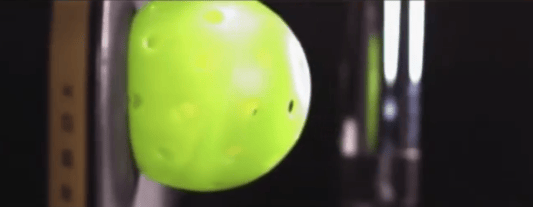
See how a pickleball ball is compressed by the Gearbox Pressure X 8E paddle
It Has a Skeleton
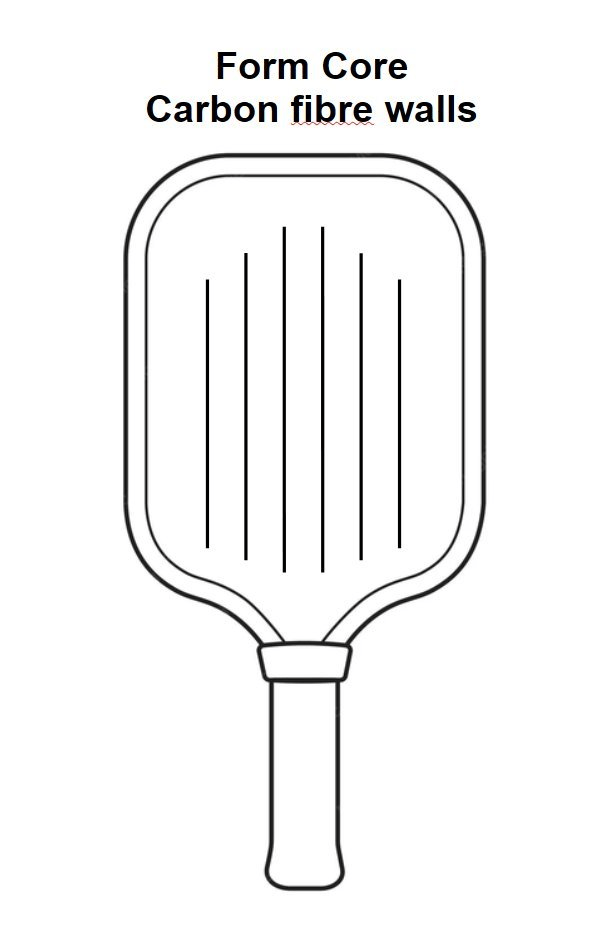
A body without a skeleton cannot carry a heavy load; a house without a truss is unlivable. The Pressure X has segmented SST carbon-fiber ribs, roughly three-quarters of an inch wide, wrapped around the foam rather than cut out of it. Compressing one rib takes about 1,000 pounds versus roughly 400 for plain EPP. Power isn’t stored in soft material that slowly crushes – it’s carried by rigid structure. That’s why elite output spreads across the whole face instead of one hot spot, and why an elongated paddle near 6 twistweight plays with hybrid-like stability.
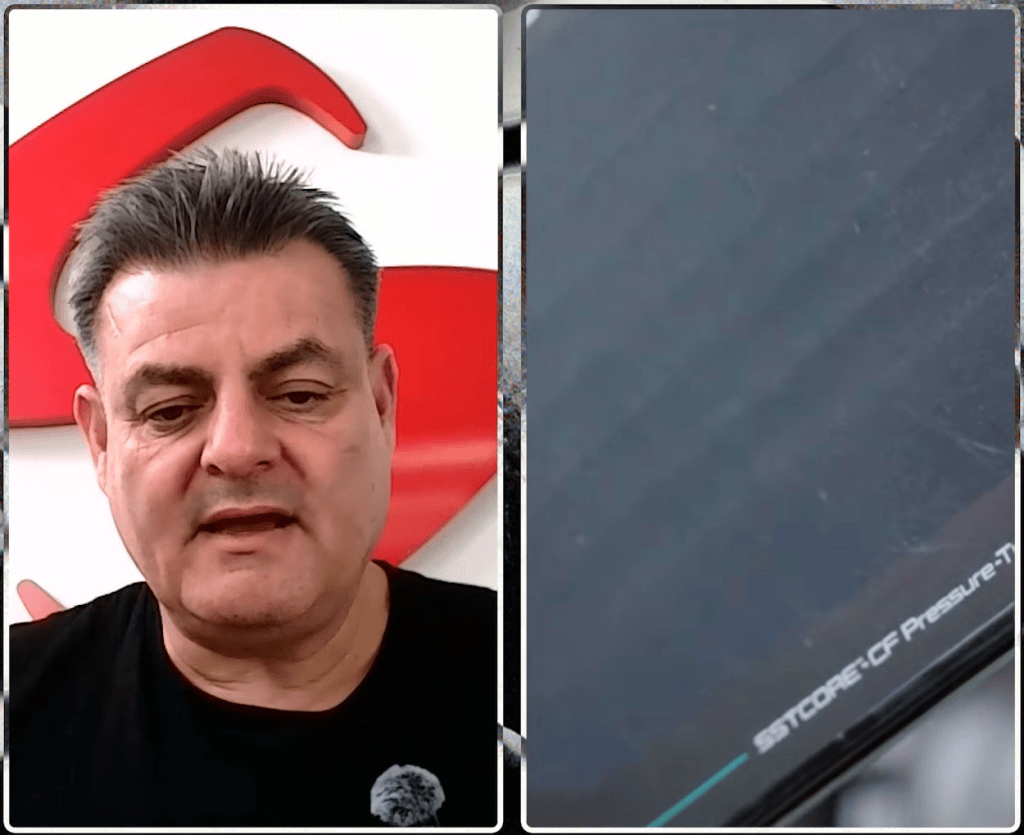
The SSTcore ribs carry the structural load of spin. Those parallel ribs, functioning like strings on a tennis racquet, firmly bite the ball for spin generation.
Its Muscles Are Tight and Strong
Structure goes slack without tension. Gearbox pressurizes the core internally, inside-out and outside-in, closing gaps ordinary paddles leave when perimeter EVA off-gasses and shrinks in a hot mold. Internal ties bond the faces so layers can’t shear. This pressure – not the foam – decides how each version feels: the more heavily pressurized 8M plays stiff, the 8E plush.
Its Skin Regenerates
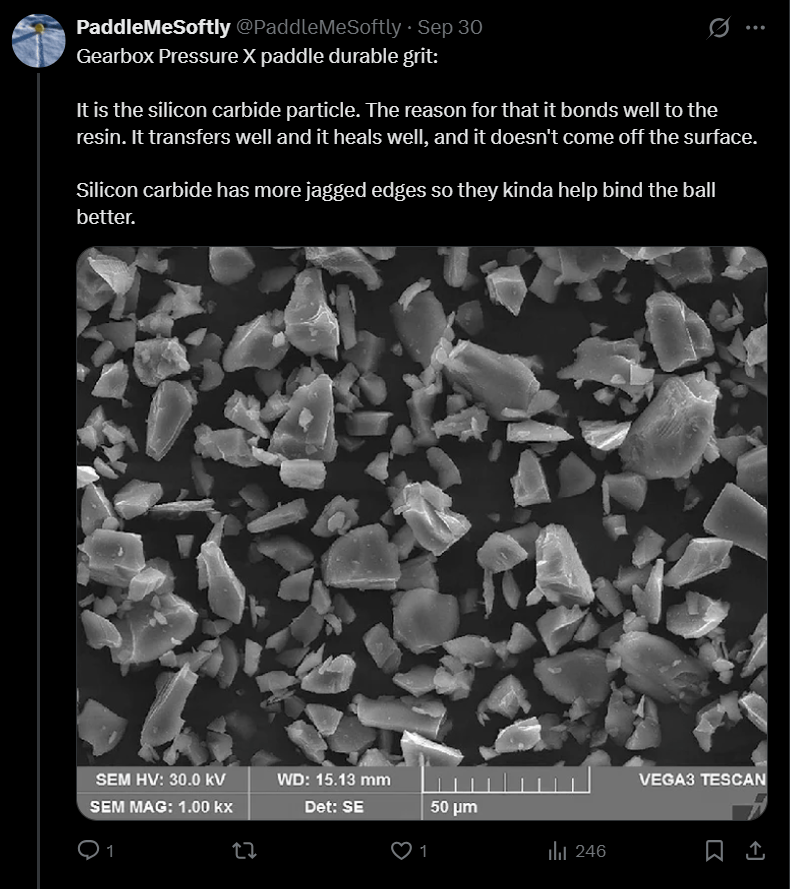
Every other surface dies on day one. Spin Lock is three successive layers: resin peel-ply peaks, particles exposed beneath them as wear progresses, then the carbon ribs themselves, pressing into the ball on hard swings and leaving faint vertical lines. Grip doesn’t run out – it steps down. Gearbox targets a 6–8% loss, then holds it for months.
And the Ribs Do Double Duty
The same ribs carrying structural load also generate spin. They are simultaneously the rigid support for the heavy load and the essential substrate for spin generation. Nothing else in my bag does both at once.
The Honest Criticism: A Preliminary Structure
For all its engineering, the Pressure X core remains preliminary rather than super-stable. The SST design is still discrete struts with junction points — not a continuous geometric network. Worse, those ribs rely entirely on internal ties to hold them together, and Gearbox hasn’t shown us what those ties actually are. We don’t know their material, geometry, or failure threshold. A paddle whose rigidity depends on undocumented bonds is a structure we’re asked to trust rather than verify. True stability would come from geometry itself, not from hidden connectors.
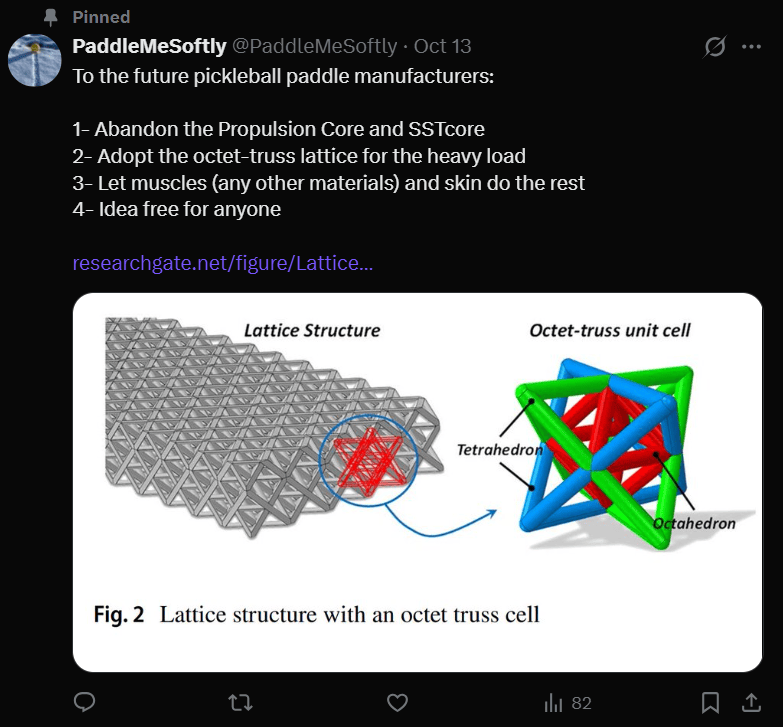
The Next Step: Geometry Over Bonds
This is where the octet-truss lattice begins to look like the logical next step. Rather than relying on discrete ribs and mysterious ties, an octet structure distributes load through a repeating, self-supporting geometry of tetrahedra and octahedra. It carries stress isotropically – equally in all directions – with no weak junctions and no need for undocumented connectors. Gearbox has built an excellent preliminary skeleton. The next leap would be building one that doesn’t rely on bonds at all.


Leave a Reply